

One Piece collector guide · October 2026
Round1 One Piece Promos: 7 Checks Before You Buy or Trade
A listing says “Round1 Luffy.” The number looks right. The photo is tiny. Before you buy, check whether the listing actually shows the arcade collaboration print—and whether that exact copy belongs in your binder.

Match the artwork as well as the card number
A card number identifies a card, but it does not always identify the artwork or promotional treatment offered in a listing. Match the character, printed number, language, and visible Round1 artwork together.
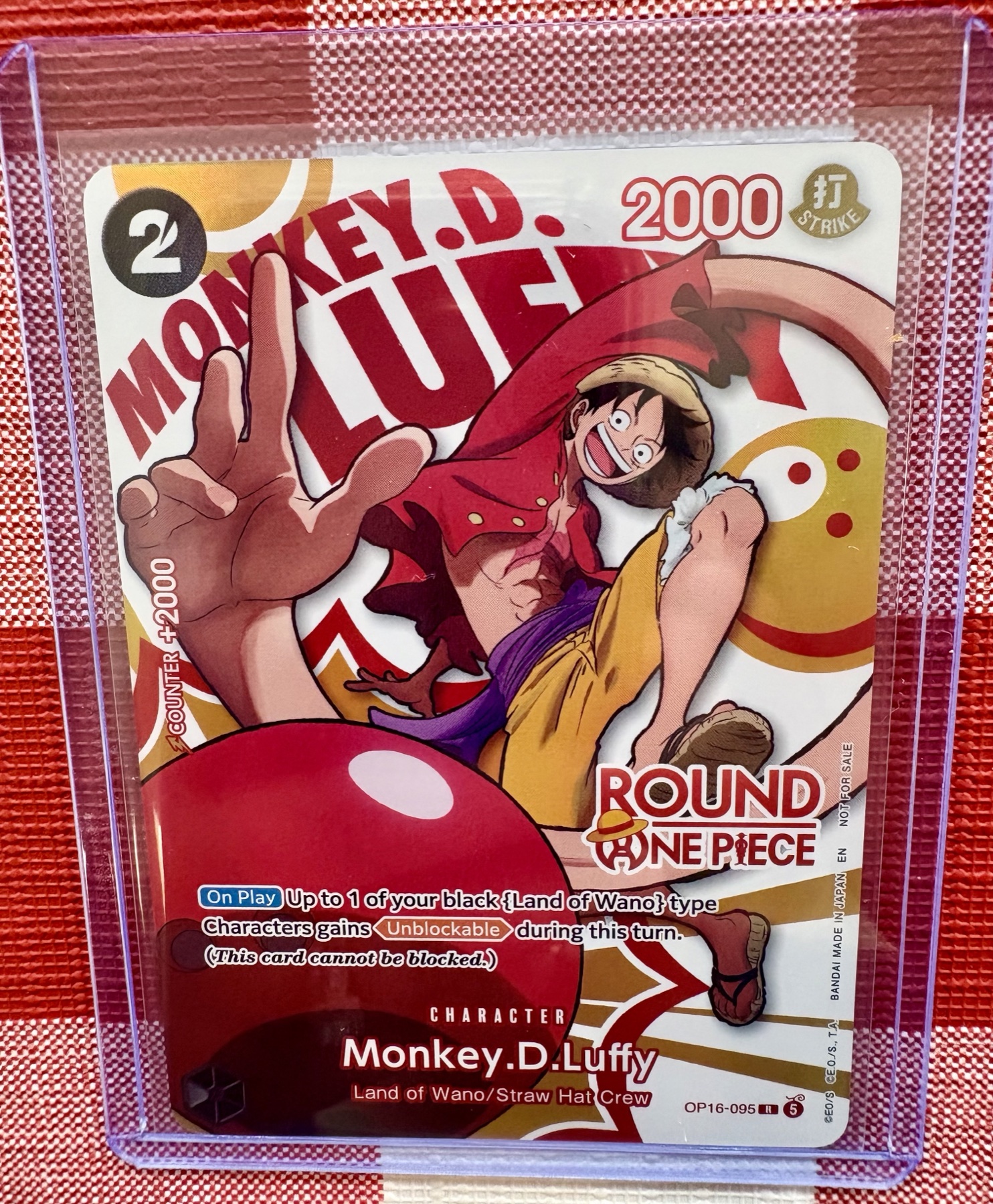
For example, our photographed set includes Luffy OP16-095, Brook OP11-056, and Nico Robin EB03-054. Use the corresponding photo in the full checklist to compare the illustration and layout. A different printing with the same number is a different collecting purchase; it is not automatically a fake.


Ask for photos of the actual copy
Request a straight-on front, a full back, and a short angled view. A stock image can help identify a design, but it cannot show the condition of the card that will arrive.
For a full-set listing, ask for one photograph showing all ten fronts together, then clearer photos of any cards you are concerned about. Make sure the image resolves the small printed numbers rather than relying on a seller’s character list.
Review authenticity and condition separately
An authenticity review asks whether the card appears consistent with the correct printing. A condition review asks about wear, scratches, dents, and other damage. A genuine card can still be a poor-condition purchase.
Start with layout, fine text, symbols, and the correct reference. Then review corners, edges, the back, and the surface under changing light. If a patch disappears when the lighting changes, request another view before calling it damage or a printing problem.
Confirm whether “ten cards” means ten different designs
Ten cards in a resale lot can include duplicates. Ask for the exact contents, particularly if the listing uses “complete,” “full crew,” or “set” loosely.
Round1’s official terms describe random sealed packs. Receiving ten packs therefore does not promise ten different characters. Count the designs in the seller’s photographs and compare them with the full checklist before treating the lot as complete.

Compare prices for the exact promotional treatment
A regular printing, a Round1 single, a sealed promotion pack, and a complete set answer different buying questions. Keep those categories separate when reviewing comparable listings or completed sales.
Check language, condition, quantity, sale date, and shipping. An asking price is evidence of what a seller wants; it is not evidence of a completed sale. One unusually high or low example is a reason to investigate the listing, not a reliable value for every copy.
Treat pickup stories as context, not proof
A wrapper, receipt, or pickup story may help explain where a card came from. It does not establish that the photographed card is authentic or that it is the copy being shipped.
Prefer a seller who provides consistent photographs and clear transaction terms. Keep your own copy of the listing and messages. If the print, condition, or contents remain unclear, pause until those questions are answered.
Record what you actually added to the collection
After a purchase or trade, record the character, number, Round1 treatment, language, quantity, and actual cost. Photograph the received card and keep any unresolved concerns with the record.
In Grade Ready, keep collection and purchase details tied to the right card identity. For a focused visual review, TCG Fake Card Checker helps compare a card photo with a selected reference and keep review evidence. A visual comparison can flag concerns; it does not certify authenticity.

A short message to send before buying
“Could you send a clear front and back of the actual card, plus a short angled view? Please confirm the Round1 artwork, printed number, language, and condition. If this is a full set, could you show all ten different designs together?”
Quick answers
Does a matching number prove it is the Round1 promo?
Match the artwork and treatment too. The number alone is not enough to establish the listing’s exact print.
Are sealed packs a guaranteed full set?
No. Random packs can produce duplicates.
Can I still pick up cards today?
Do not rely on an old article or resale listing for that answer. The Phase 5 window listed at our October 7 check has ended; use Round1’s official page for current announcements.
Independent collector guidance. Grade Ready is not affiliated with Round1 or Bandai. This checklist supports a review; disputed or high-value cards may require examination by a trusted specialist.

2 comments
[…] resale lots, check whether “ten cards” means ten different designs. Our Round1 buying and trading checklist walks through the photos and condition details worth […]
[…] seven-check buying guide is the next step if you are comparing singles, trades or complete-set […]